
Parenting & Health, 6 min read, September 22, 2026
Every Night Ended in a Toothbrush Standoff. Then We Stopped Fighting About It.
My son is seven and sensory-sensitive, and for two years brushing his teeth was the worst ten minutes of our day. This is what finally made bedtime calm again, and what I wish someone had told me sooner.
 By Jen, 36, mom of two, as told to the Sonic Brush team


It was never really about the toothbrush
If you've never had a nightly standoff over two minutes of brushing, this might sound dramatic. If you have, you already know exactly how it goes.
"Leo, did you brush?"
"Yes."
"Your toothbrush is dry."
Then the negotiating would start. Then the tears, usually his and sometimes mine. By the time I'd got the brush anywhere near his back teeth, he'd be clamping his jaw shut and I'd be kneeling on the bathroom floor at 8:40pm wondering how something this small had turned into the hardest part of our day.
My daughter Ava, who's nine, would be watching from the doorway. Some nights she'd quietly go and brush her own teeth just to get away from it, which honestly made me feel worse.
Leo isn't a difficult kid. He's funny and kind and he'll happily explain the entire solar system to you. But he's sensitive to how things feel, and brushing hits nearly all of it at once: the scratch of bristles on his gums, the mint that he says "burns", foam filling his mouth, and someone else's hand in there steering the whole thing.
For a long time I treated it as a discipline problem. It wasn't.
We tried everything the internet suggested
Timer apps and brushing songs. He liked the songs. He still didn't want the brush in his mouth while they played.
A sticker chart. It worked for about four days, until the sticker stopped being worth it.
Every kids' toothpaste flavor we could find. Strawberry was better than mint, but the foam was still the problem.
A light-up electric toothbrush with a cartoon on it. The buzzing on one tooth at a time was even worse for him. It lives in a drawer now.
Doing it for him. This was the one that made bedtime a fight, because it meant holding his head still while he tried to pull away. Nobody wins that.
Every one of those ideas was trying to make the same two-minute routine more fun. None of them changed what the routine actually felt like to him.
What his occupational therapist said
At one of Leo's sessions I mentioned, almost as a joke, that brushing was our nightly war. His OT didn't laugh. She said it's one of the most common things she hears from parents of sensory kids, and that the fight usually comes from three places: the sensation itself, how long it goes on, and not feeling in control of what's happening in your own mouth.
The research backs her up. Studies suggest up to 95% of autistic children have some form of sensory processing difficulty, and in one survey of nearly 400 families, 60% of parents of autistic children said it was moderately to extremely hard to have a dentist or hygienist clean their child's teeth, compared with 13% of parents of other children. You don't need a diagnosis for brushing to feel like too much, either. Plenty of kids are simply sensitive to it.
And the routine still matters. According to the CDC, children who brush daily with fluoride toothpaste have fewer cavities, so skipping it to keep the peace wasn't really an option either.
So I stopped asking how to make Leo cooperate and started asking something else: what would brushing need to feel like for him to actually be okay with it?
What I was looking for
Once I thought about it that way, the list was short. It had to be:
- Soft. Nothing scratchy on his gums.
- Short and predictable. The same length every night, with a clear end he could count on.
- His to control. He starts it and he stops it, with no one else's hand in his mouth.
- No technique needed. Because "get the back ones properly" was never going to happen at the end of a long day.
- Something he'd actually want to pick up.
| What Leo needed | Regular kids' toothbrush | Light-up electric kids' brush | Soft U-shaped kids' brush |
|---|---|---|---|
| Soft on sensitive gums | Depends on the brush | Buzzing can be a lot | ✓ |
| Same short time every night | ✗ | ✓ | ✓ |
| Your child is in control | ✗ Often needs a parent's hand | Sort of | ✓ |
| No brushing technique needed | ✗ | ✗ | ✓ |
| Reaches the whole mouth at once | ✗ | ✗ | ✓ |
Compares product categories, not named brands.
The one we tried
A friend from Leo's class had a Sonic Brush Kids, a U-shaped toothbrush with a little panda face on the handle. Her daughter uses it every night without being asked, which at the time sounded like science fiction to me.
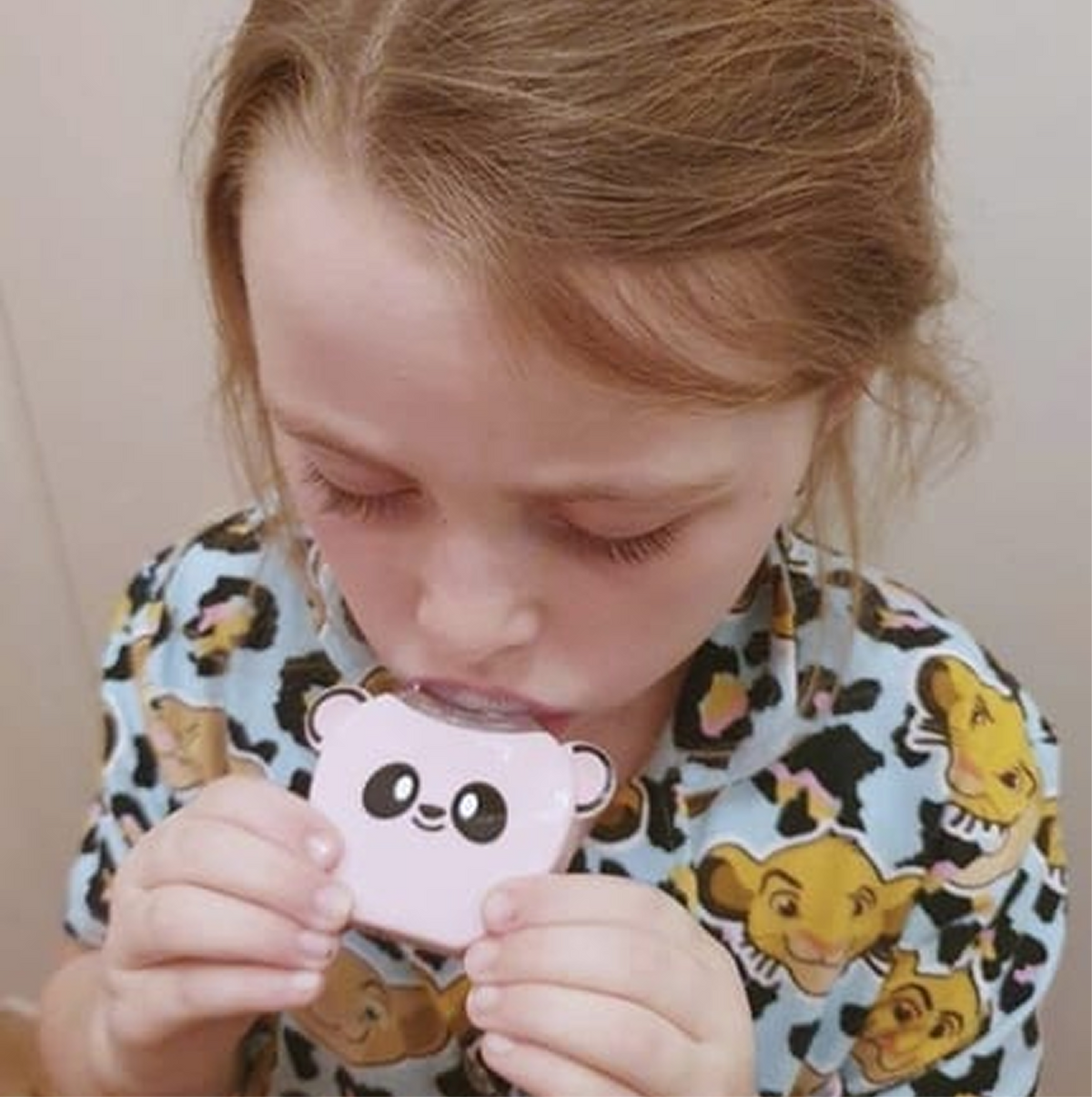
It works differently from a normal toothbrush. The mouthpiece is made of soft silicone and shaped to fit around the teeth. Your child puts it in, bites down gently, presses one button, and the sonic vibration brushes along the whole mouth at the same time for 30 seconds. Then it stops by itself.
That was exactly what Leo needed. It was soft, it took the same 30 seconds every night, and he was the one pressing the button, with nobody holding his head. And the panda did a lot of the convincing for me.
It comes in two sizes, one for ages 6 to 7 and one for ages 8 to 15, so we got the smaller one for Leo. It also has several vibration settings, which turned out to matter more than I expected.
Honestly, what it is and isn't
I want to be straight about this part. It's a soft silicone brush built for comfort and consistency, and there isn't much research comparing U-shaped brushes for kids with a parent carefully brushing for two full minutes. I'm not claiming it cleans better than that. For us it replaced a nightly fight that often ended with barely any brushing at all.
Dental guidance says kids still need an adult keeping an eye on their brushing until around age 8, and some sources say closer to 10. So I still check Leo's teeth a couple of times a week, I still floss for him, and he still goes to the dentist every six months. The difference is that none of that is a battle anymore.
It's also recommended by Dr. Adam Gray, DMD, a licensed dentist in Ohio who has personally evaluated Sonic Brush and recommends it for everyday oral care.

"Solutions that enhance daily hygiene, reduce user error, and make brushing more consistent."
How we use it
- Add toothpaste. Spread a small amount of your child's usual toothpaste along the mouthpiece. Regular or kids' toothpaste both work.
- Bite down and press the button. They slip the soft mouthpiece over their teeth, bite down gently and press the button. It runs for 30 seconds and stops by itself.
- Rinse. They spit, and you rinse the mouthpiece under running water.
A tip if your child is sensory-sensitive: don't start with everything at once. We tried it the first few nights with no toothpaste and on the gentlest vibration setting, just so Leo could get used to the feeling. Once he was comfortable, we added a tiny bit of toothpaste, then moved up a setting.
What the first few weeks were actually like
Night 1Leo was curious rather than scared, which was already new. He bit down, pressed the button, laughed at the buzzing and was done before he had time to object. I stood in the doorway not quite believing it.
Night 3A wobble. He decided the toothpaste was too much, so we went back to no toothpaste for a couple of nights on the lowest setting. I let him set the pace, which I think mattered more than anything.
Week 1Ava asked why Leo got the "cool one", so she ended up with her own in yellow. Two little pandas glowing on the counter at bedtime is now a normal sight in our house.
Week 3For the first time, Leo went and brushed without being asked. I didn't make a big deal of it, but I definitely told my husband about it that night.
Month 2At his six-month checkup, he kept his mouth open for the whole cleaning. The hygienist had no idea how big that was for us.
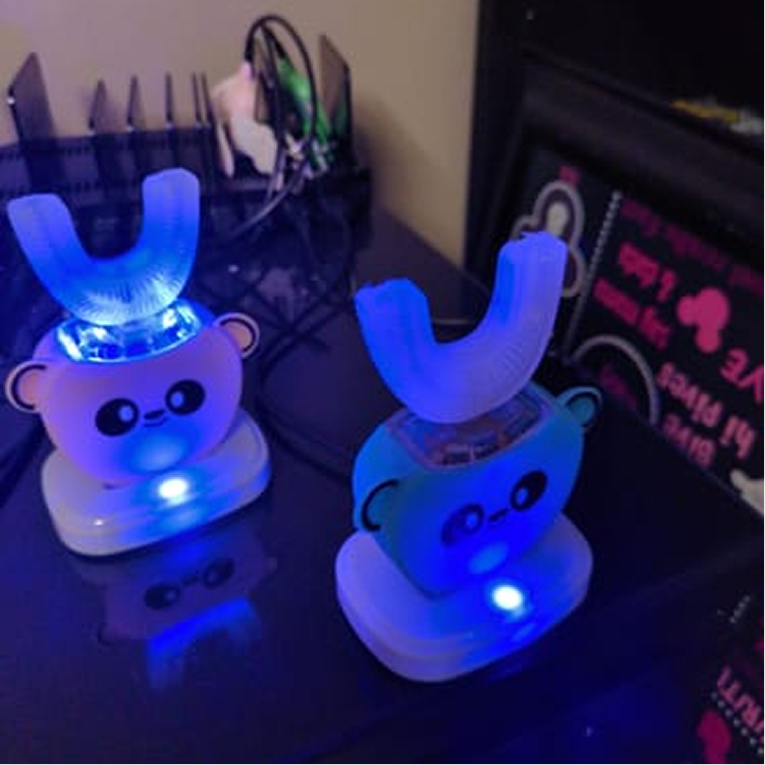
I didn't turn Leo into a kid who loves brushing his teeth. I just stopped asking him to do it in a way that felt awful to him.
See Sonic Brush KidsWhat other parents say
These reviews are published on sonic-brush.net.
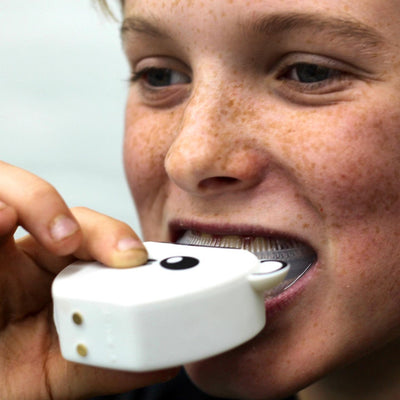
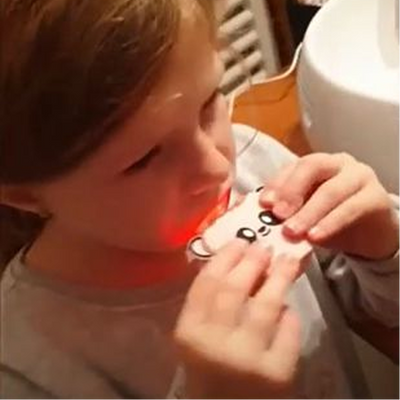
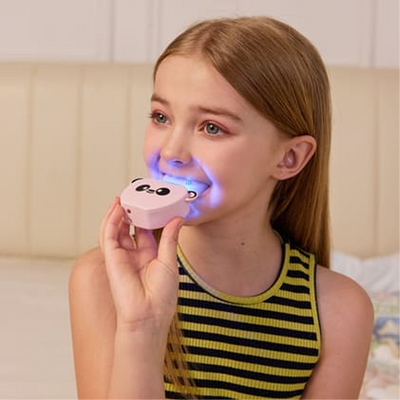
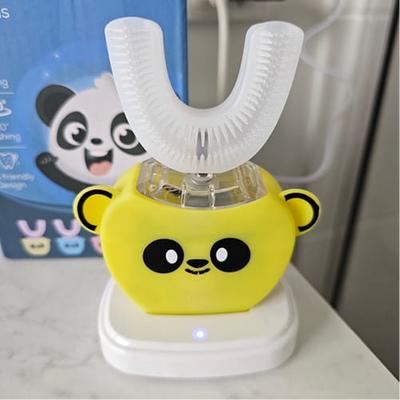
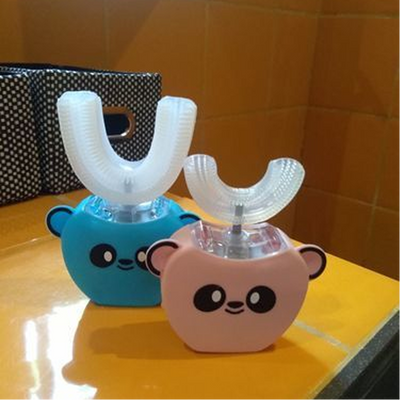
Photos shared by Sonic Brush Kids customers.
"Our child was very sensitive to toothbrushing and couldn't stand having her teeth brushed. It took a couple of days, but once she was ready, we slowly introduced toothpaste and different vibration levels."
"We ordered the kids Sonicbrush and my kids love them! They have simplified our brushing routine especially for my sensory child. I would absolutely recommend the kids Sonicbrush!"
"I bought the Sonic Brush for my 9-year-old who doesn't like brushing his teeth. So far it has been great! He doesn't fight us about brushing like he used to, and it has made the daily routine much easier."
"I bought this brush for my 7 and 9 year old kids. They love the fun design of the panda. The brush is easy to use, with just one soft button to press. There are several vibration modes. Overall, I'm happy with this order. It's fun for kids and does its job!"
Questions I had before ordering
Which size should I choose?
There are two: ages 6 to 7 for smaller jaws, and ages 8 to 15 for older kids. If your child is between sizes, the support team can help you pick.
My child is sensitive to vibration. Will this be too much?
It has several vibration settings, so start on the gentlest one. We also did the first few nights without toothpaste so Leo could get used to the feeling first.
What if my child won't put it in their mouth?
Let them hold it, press the button and feel the vibration in their hand first. Leo was curious rather than nervous, but every kid is different, and there's no rush.
What is the mouthpiece made from?
Soft, nitrosamine-free silicone designed for everyday use.
Do I still need to supervise and floss?
Yes. Kids generally need an adult keeping an eye on their brushing until around age 8, and help with flossing for longer. Keep up regular dental checkups too.
Can they use their usual toothpaste?
Yes. Regular or kids' toothpaste both work with the mouthpiece.
How long does the battery last?
About 2 hours of active brushing, which at two 30-second sessions a day means several weeks between charges.
Can siblings share one?
They can share the handle, but each child should have their own mouthpiece for hygiene.
How often should the mouthpiece be replaced?
Every three months, or sooner if you notice visible wear.
What if something breaks?
It comes with a two-year warranty, and the support team will arrange a replacement for any issue it covers.
How long does shipping take?
Orders ship within 1 to 3 business days, and delivery then takes 3 to 7 business days depending on where you live. You'll get a tracking link by email as soon as it ships.
Sonic Brush Kids
If you're where I was, kneeling on the bathroom floor every night, I wouldn't tell you to try harder or buy another sticker chart. I'd tell you to make brushing feel different for your child.
Sonic Brush Kids is $59.99 right now, down from $99.99, with free shipping.
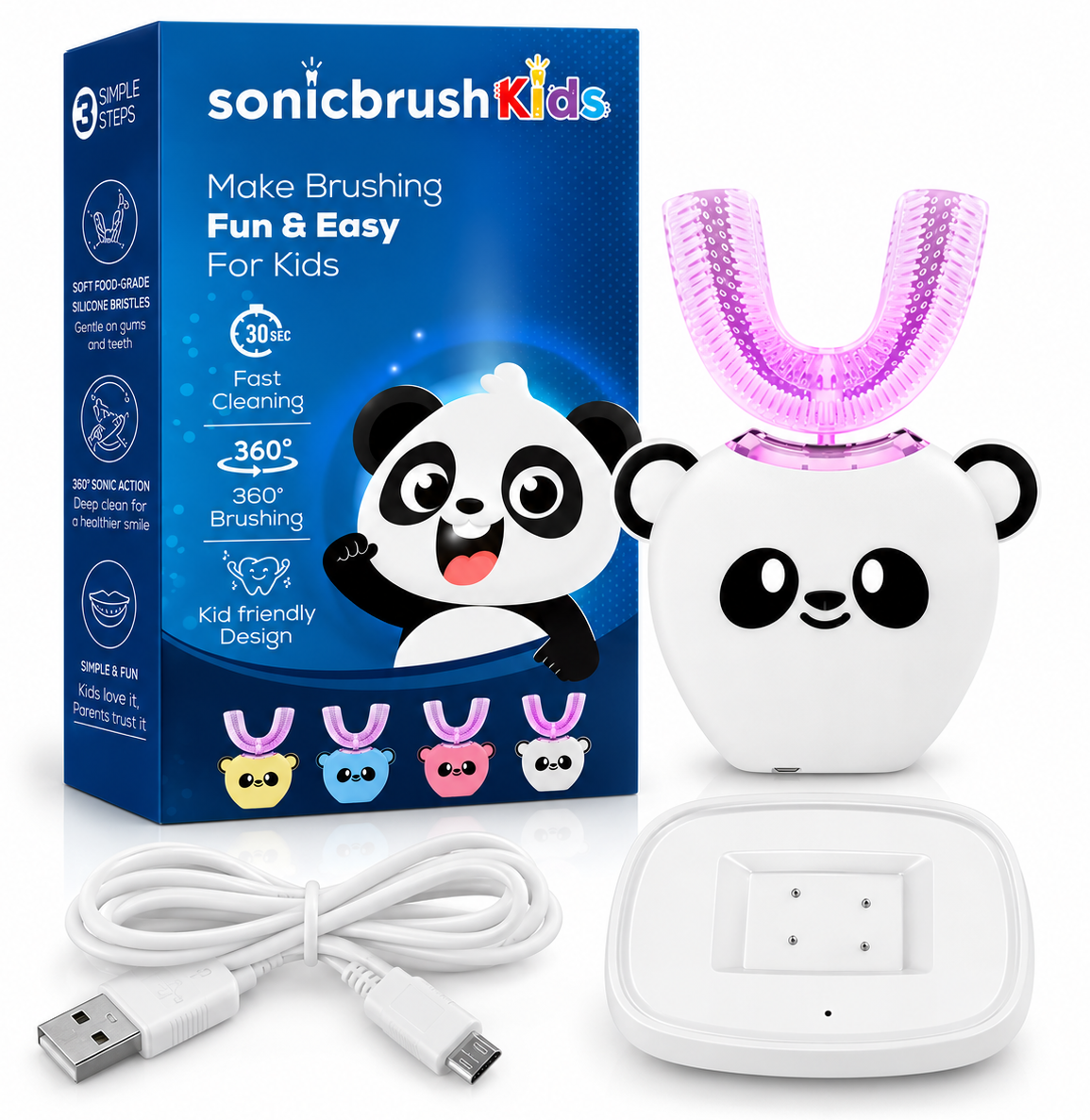
Sonic Brush Kids
Recommended by Dr. Adam Gray, DMDFree shipping
- Sonic Brush Kids with its soft silicone U-shaped mouthpiece
- Charging station and USB charging cable
- User manual
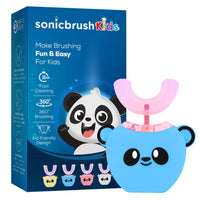
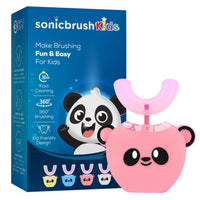
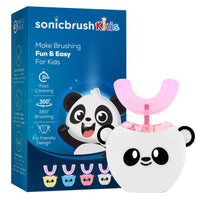
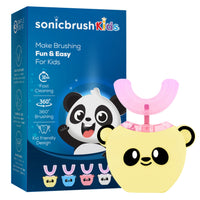
Available in blue, pink, white and yellow.
Get Sonic Brush Kids30 nights to try it, even if used.
 Rated 4.5 out of 5 on Trustpilot
Try it for 30 nights
Let your child use it for 30 nights, and if it doesn't work for them, send it back for a full refund.
You can keep trying to make the old routine more fun. That might work for some kids. It never worked for mine.
Or you can try a way of brushing that's soft, takes 30 seconds, and puts your child in charge of the button.
A calmer bedtime isn't a reward for getting everything right. Sometimes it just takes changing the thing you're asking them to do.
Get Sonic Brush Kids, 30 nights to try it